We are on Facebook and Twitter!

Like us on facebook - www.fb.com/thelearningcraft
Follow us on Twitter - @learningcraftNG

25/10/2012

Bullying in Schools - What can we do?


One of the big questions that worries most parents are:  Are my children safe when they're not with me? The 'ALUU 4' killings happened as a result of the effect of an inherent 'bullying' tradition. Parents know that kids are often reluctant to tell them about bullying.  Consequently, many parents are finding it increasingly harder to know if their kids are safe and protected at school. How would you define bullying? What comes to mind immediately? Fighting, obtaining, slander, pushing, shoving, name calling, insulting, and taunting are some that resonates in the mind. Any type of physical or verbal harassment where the intent is to harm someone is considered bullying.

According to Federal Ministry of Education (2007), since the last decade, several cases of violence against children such as torture, kidnapping, shooting, sexual harassment, rape, corporal punishment and so on have been reported in various newspapers, magazines and television stations all over the world. In Nigeria, even though cases of bullying had been reported in many schools, this deviant act is not always given any desirable attention. Furthermore, there are no available statistical facts to show the actual number of students that are bullied or victims in Nigerian schools. 


Some myths about bullying include:
  • It’s part of life.
  • Boys will be boys.
  • It happens at all schools; don’t worry
  • Sticks and stones will hurt my bones but words will never harm me.
  • Bullying never did me any harm.
  • It’ll toughen you up.


I don't accept any of the above. Some adults are scarred for life as a result of bullying. The fact remains that every child matters and one can never really know how bullying may affect a particular child.

Here are some tips for school administrators and teachers that will help reduce the incidence of bullying.

  • Adopted anti-bullying programs.
  • Ensure the school has a trained counsellor/psychologist
  • Fill the school with posters and slogans
  • Create conflict resolution lessons as part of the curriculum
  • Invite guest speakers
  • Provide in-service training to all staff
  • Monitor hot spots around the school with appropriate student/teacher ratios (hallways, cafeteria, playground, parking lots, and buses.
  • Distribute policy statements to students and parents.
  • Seek parent involvement on committees
  • Conduct parent meetings.
  • Utilize student and parent surveys to gather data.
  • Document reported incidents.
  • Provide counseling support.
  • Involve parent organizations and the police department.
  • Review and evaluate everything.
All of the above is as worthless only if the school has the leadership to make things happen. No one is going to care more about your child than her most important teacher, nurturer, and protector which is you.

20/10/2012

27 minutes of sleep and the trouble maker


Twenty-seven minutes of sleep could be the difference between a quick tempered or cranky, distracted trouble-maker and a well-behaved student. According to an experimental study published in the November 2012 issue of Pediatrics, slightly increasing the amount of time children sleep results in improved alertness, impulse control, and emotional stability throughout the school day.

"Even small changes in daily life that can allow children to add about a half hour of sleep could have a significant impact," said study author Reut Gruber, director of the attention behavior and sleep lab at the Douglas Institute in USA. "Extending sleep opens the door to an effective, feasible way to improve children's health and education.

The study looked at 34 healthy students ages 7 to 11. For one week, half the students went to sleep earlier than usual, gaining, on average, 27 minutes of sleep. The other half of study participants pushed bedtime back, resulting in 54 minutes of sleep lost.

Teachers then monitored the two groups of students noted “significant differences” in the behavior of the two sets of students. Well-rested children were found to be more attentive and in control of their emotions. Students who were sleep-deprived not only appeared tired, but they were also more likely to become frustrated, cry, or lose their tempers.

A foundation in the United States of America called the National Sleep Foundation recommends children ages 5-12 sleep 10-11 hours each night.

Are your kids getting enough sleep every night? I just recently began to crack down on bedtime routine. Are you dealing with bedtime routines properly? I suggest you do, now you know its effect on your child's education.

If he is losing his temper, fighting incessantly, losing focusing and making a lot of mistakes; be sure that no 'spirit' has taken over him (lol). He may just need more sleep.

18/10/2012

Britain revises 'History' lessons while Nigeria removes 'History' lessons in secondary schools.


I wrote a piece about the removal of History as a subject in our secondary schools. (see 'EDU-INFO: REALLY? NO MORE HISTORY!' in my older posts). I read this excerpt from The Daily Mail UK concerning Britain's education sector's plan for the subject we are neglecting.

History lessons will be rewritten to include 200 key figures, such as Winston Churchill, and events which shaped Britain under a new national curriculum drawn up by education secretary Michael Gove. The current syllabus, previously attacked for being too politically correct, will be scrapped with the intention of giving children a deeper understanding of history.

Under new plans school children will learn a narrative about British history and key international developments, including the fall of the Roman Empire, the union that created Britain and the decline of its power.

Secondary school children aged between 11 and 14 will move on to 50 wider topics about the modern world, including Soviet-U.S. relations and how they shaped the world, as well as the influence of immigration on British society. Teachers' from the Prince's trust are saying that in history, for example, they do not see how you can have a good foundation of knowledge without understanding the chronology of events.’ 

The current version of citizenship, which includes topics such as identities and diversity and how to negotiate, plan and take action has been cut back from 29 pages to one for 11 to 14-year-olds.The new syllabus will focus on the British monarchy and parliamentary democracy as well as theories on liberty and rights.

In geography, primary children will study physical features, the nature of rocks, rivers and mountains, the names of countries and the characteristics of countries as well as how glaciers shape landscapes. Later on in secondary school the topics will become more specific, including aspects of human geography, like the industrial expansion of Asia.

This follows criticisms of the current curriculum for failing to ensure children learn about human and physical processed which shape geography.

Does this surprise you? If History is being revised to better suit the students by countries such as Britain whose educational standard is not to be compared with ours, then it's relevance cannot be overemphasized. What could have informed the decision to remove History as a subject in secondary school? I wonder which way we are going. 

15/10/2012

Curriculum Chaos --- The students get confused


Just as the world has become more sophisticated in other spheres; so has significant changes taken place in education management. Insufficient time to adapt to the changes confuses the educators. Sometimes they try to do the right things in a wrong way. Even educators who are open to change are uncertain about what kind of changes will be most effective and how best to go about making them. Frustration and despondency abound as well as the sense that "we're already doing so much - how can we possibly do more".

Curriculum improvement is an ongoing international trend that mirrors changes in the society and teaching methodology. I believe that a move to an ‘outcome-based education’ is imperative but it will present Nigerian educators with a challenging and significant ‘paradigm–shift’.

Some of the new curriculum introduced these days have become quite chaotic and too hard for children and even teachers. Just because some curriculum is applied in one school, another school is quick to copy it without understanding how it's used, when to use it and its relevance. The inconsistency of curriculum choices made by the school leaves the students more confused as they go. Today, it's the British curriculum, tomorrow, its Nigerian and next it is the American....chaotic, isn't it?. A holistic approach is ideal in designing curriculum but it MUST be generally consistent even when introducing modifications. 

A good curriculum has many distinct features but if your curriculum embodies the following, then you are off to a good start! 

  • promotes interactive learning and encourage the construction of knowledge
  • encourages active learning
  • fosters exploration and inquiry, rather than focusing on “right” answers or “right” ways to complete a task.
  • encourages development of positive feelings and dispositions toward learning while leading to acquisition of knowledge and skills
  • helps achieve social, emotional, physical, and cognitive goals and promotes sustainable relevance to our core cultural values.
  • promotes and encourages proper social interaction
If not, you have so much more to consider. Build a curriculum that leaves room for modification because education is evolving in nature. Consistency should be a key element so that it does not lead to confusion among the learners. A confused learner can easily translate to a frustrated learner.


13/10/2012

TELL-A-VISION - The 'Nicki Minaj' and company influence

Am I repeating the TV issue? I guess I just can't help it! The nudity I see in music videos these days.....I cannot shout! How about the 'kissing' and 'love scenes' in some cartoons?

A close friend of mine (a style/image consultant) in Canada recently wrote a paper on the influence of television on children and youths of today. 'TELL A VISION' she termed it, there is more to come from her. 

You see, what we watch directly influences us; it could breed unwanted thoughts and desires unknowingly. The media has influenced self-identity and even caused vulnerabilities and some shameful youthful exuberances! 


My friend said that our ontology (the branch of metaphysics that studies the nature of existence or being), has been influenced by the technological lens. This is true. Girls, are you aware that some of these experiences have gender bias? Watch all the music videos, young girls get exposed for sexual desires and men are meant to sit back and enjoy the view? It is very embarassing and quite sad! This has contributed to the downward slope of gender equality and discrimination. Many teenage women have interesting role models - the Nicki Minajs,  Rihannas, Lady Gagas etc of this world! Don't get me wrong, they are talented artistes but the image they render in the delicate minds of our youth is my focus.


The sense of style, nudity and sexual innuendos created in the mind of our children/youth undermine the education and opportunities other 'exemplary' role models present. Young boys aspiring to look like rap stars; dragging and sagging pants,  using slurred speeches, wearing unbefitting jewellery etc. - this magic world of the Internet and TV screens is changing our children's lives much more than it should.

I could go on and on but what we must do is to protect our children so they can tell-a-good-vision! The 'Nicki Minaj persona' shouldn't dictate the culture of our tomorrow's youth.

08/10/2012

Myth buster: Am I stuck with the same IQ all my life? NO!


Many people think of IQ as a genetic trait like eye color, something you're born with and stuck with for life.....? But mounting evidence is shedding a different light.
A growing body of research is showing that a person's IQ can rise—and even fall—over the years and through an individual's lifetime.

IQ or intelligence quotient is a score that is supposed to quantify your level of intelligence. I read that what defines intelligence is still up for debate - that a predetermined IQ isn't necessarily an accurate measurement. But it has been long assumed that our scores do not change; that we are stuck with the intelligence we were born with. Well, it is not true.

"[Some] assert that an individual's intelligence is a fixed quantity which cannot be increased. We must protest and react against this brutal pessimism."
- Alfred Binet, inventor of the original IQ test, 1909


Fola (name changed) is a child I have taught for 2 years. She has always been  a 'weak' student. She found it quite difficult to assimilate lessons taught across all subjects. All teachers had the same to say about her situation. Upon enquiry, I discovered that she wasn't followed up and made to study as much as she should have, because her grades had been consistently low. She definitely needed more lesson time. After a whole session had passed, changes were made to study habits and we saw a significantly higher percentage of improvement. One that made her not to re-do the year again.


One study shows changes in IQ after just a few weeks of effort. 33 British students were given IQ tests and brain scans at ages 12 - 16 and again about 4 years later, 9% of the students showed a significant change of 15 points or more in IQ scores. These changes were not due to measuring errors because the MRI's showed changes in gray matter which is linked to IQ. Am I surprised? No! We, the teachers see improvements daily especially when extra efforts are put in.

It was found that people with a lower IQ (between 75-90 range) are usually at a risk of dropping out of secondary school while those with a higher IQ possibly attain higher social intelligence.  There is a need to help the 'weaker' kids to improve scores AND those who are average can be supported to also achieve higher scores. Nigeria is in dire need for a lot more intellectuals in many fields of interest; so we have to 'up' our efforts to reduce student dropout ratios and produce more graduands.

We are not stuck with any level of IQ! Since IQ can change, there seems to be no harm in helping your child to boost their scores through changes in study patten and improved practice time. Being branded with a low IQ at a young age, in other words, is like being born poor. Due to family circumstances and the mechanisms of society, most people born poor will remain poor throughout their lives. But that doesn't mean anyone is *innately* poor or destined to be poor; there is always potential for any poor person to become rich. 

The exciting reality is that IQ scores:
  • measure developed skills, not native intelligence.
  • can change dramatically.
  • say nothing about a person's intellectual limits.

05/10/2012

WORLD'S TEACHERS' DAY


To all the wonderful Teachers spread across the globe, I say HAPPY TEACHERS' DAY to you all! Your efforts in grooming the world is celebrated today every year. I am extremely proud to be part of this celebration.

World Teachers' Day, held annually on October 5th since 1994, commemorates teachers’ organizations worldwide. Its aim is to mobilize support for teachers and to ensure that the needs of future generations will continue to be met by teachers.
According to UNESCO, World Teachers' Day represents a significant token of the awareness, understanding and appreciation displayed for the vital contribution that teachers make to education and development.

To all true teachers' and my future 'CELEBUTORS', this is for you.

A Teacher for All Seasons

A teacher is like Spring,
Who nurtures new green sprouts,
Encourages and leads them,
Whenever they have doubts.
A teacher is like Summer,
Whose sunny temperament
Makes studying a pleasure,
Preventing discontent.
A teacher is like Fall,
With methods crisp and clear,
Lessons of bright colors
And a happy atmosphere.
A teacher is like Winter,
While it's snowing hard outside,
Keeping students comfortable,
As a warm and helpful guide.
Teacher, you do all these things,
With a pleasant attitude;
You're a teacher for all seasons,
And you have my gratitude!

By Joanna Fuchs

Bill to restrict children of office holders from studying abroad?


Very funny! Sometimes, our politicians make us look like we are all illiterates. Where is the place of this bill on our scale of priority of measures to be taken to seriously improve Nigeria's education standards? Or is this not one of those that will end up being trashed in the bin after they have glorified their ineffectiveness once again? How is this a drastic measure? How does it affect the millions of Nigerian children affected with the poor state of education we are facing. Read this.

A bill which seeks to prevent children of public office holders from schooling abroad has passed second reading in the Senate.
The bill, if passed, will restrict children of public office holders from schooling abroad except for specialized courses not offered in any of the country’s educational institutions.
The sponsor of the bill, Senator Mohammed Basheer (PDP Kano) said the country’s education sector is confronted with serious challenges and it has become important for the Senate to adopt drastic measures to rescue the ailing educational system.
The bill was among three bills which passed second reading in the Senate earlier without being debated.
If we look into this, more than three quarters of the Senators have their kids schooling abroad, or about to make a plan to, or  even have completed their studies abroad. And we all know that this will not stop.
The sponsor of the bill noted that “it has become important for the Senate to adopt drastic measures to rescue the ailing educational system.

Sir, this is an unrealistic measure. Please can you do a proper research?

03/10/2012

When Technology becomes a family friend. Can it be good?


Technology has made the world “smaller”, making it easy to know what is happening continents away. We now have access to more information than at any other time in history. This includes information about other people, places, new scientific discoveries and ideas different from our own. But how can it be made to good use only?

Give your kids opportunities to explore and learn about the world beyond their backyard. Encourage your teen to get involved in good causes online and through social media; tell them that they are free to get on social media but the criteria is that you MUST have their passwords. You could even share yours so they see that you are open enough (be sure you are clean though)......this goes a long way! Remind your kids that there are also wonderful ways to get involved in communities and causes locally.

Teachers have a role to play in this (especially in schools that have access to some technology). They could expose their students to the use of technology by using it in classrooms and opening forums where they can share assignments, group work and course discussions. This helps to open up a world of the good use of technology to children especially teenagers. I feel that exposing children to all of the technology that we have to offer to them is a good thing--as long as the children understand HOW that technology works and HOW that technology is improving their lives.

For example, a student must first learn what 2 + 2 is and how to compute 2 + 2, manually, before they should be allowed to use the calculator to do the arithmetic for them. ( I am NOT saying a student should or even needs to use the calculator to compute 2 + 2, I just used 2 + 2 as an example). As long as the student can understand and know what the calculator is doing for them, then using the calculator is a beneficial tool but must be used sparingly and only when needed. The calculator allows the student to focus on the bigger picture at hand, such as solving an equation, and does not have them tired down on the arithmetic.

It's here to stay, it's part of their generation. Parents have a huge role to play in guiding and educating their children about the pitfalls of the Internet. It's necessary to start children's education in this area.

Parents should control access to computers and phones etc. of their children. Parents also have the responsibility to learn about these new technologies and social network sites in particular, otherwise they will be extremely baffled by how technology and social network sites work and what they offer - especially in terms of security. Without this knowledge the parents cannot possibly control and help their children.

Parents need to set conditions of use and rules for these devices and one I condition in particular should be this-  that at any time, I (the parent) must have total access to the phone or computer. If not, the device WILL be confiscated. This is to offer protection from materials that may have been sent by third parties, which children have no control over. One study shows that the highest percentage of how students learn to use technology is by  them learning its use by themselves. Nobody needs to teach them, they will use it whether we like it or not! So, I suggest you get on the train and use it alongside them.

01/10/2012

Sights and Sounds of the Independence Day Celebrations - LIS Style!

HAPPY INDEPENDENCE DAY NIGERIA! It is my sincere wish that the right decisions are taken for the right reasons at the right time. Nigeria can be great!

Fun day at the Lebanese International School. Some parents made me so proud just by the way they adorned their kids with beautiful traditional Nigerian outfits. Watch this. 
 

The Stage


grade 2


IGBO PRINCESS (so cute)
kg 2
Nice....


some fulani, some yoruba
Grade 3


grade 5


grade 4
more princesses
A piece of the cake....hehe!


29/09/2012

Independence Day and My Child


My oldest child is now 7 years old and is beginning to ask too many deep questions. Everything must make sense to him! He asks, "why do we have to celebrate Nigeria's Independence day?" I had a whole lot to explain some of which I will share with you.

Before I do, let's review the relevance of Independence day celebration to children. When children get older, they begin to put the meaning of independence in perspective. Independence is an attribute every individual strives to attain in life. Most of what parents hope to achieve with their kids is to help them gain some sort of independence....for decision taking, family-life, work, income etc. We teach our children to survive on their own and when they do so successfully, we feel accomplished having played our role in their story. The world becomes their oyster. In this, we find relief.....isn't it?

I explained that whole idea of an Independence day celebration is to mark a country's birthday. A day the citizens of a country begin to take charge of themselves. That when one becomes independent, they get a lot of freedom but it also comes with a huge responsibility. A responsibility to ensuring that the right things are done at the right time for the right reasons. My son is fond of saying that he wants to be the 'Emperor' of Nigeria; (these cartoons have definitely taken their space in his vocabulary)....meaning President. So I say to him that he should take a few minutes to think about what he can contribute to his country and to the world. And he said something that struck me......."I will make sure that every place is clean and everyone tells the truth no matter what". I wondered.....why telling the truth? How is he perceiving his country? He will often say that Nigeria is not like many others? I asked him why. He says that if everyone tells the truth, we will have a country that isn't this old looking. Old looking? You can only imagine how i felt! I stopped to think! Really, if everyone told the truth relatively enough in Nigeria, we sure will fare far better for it.

Discuss the day with children. Ask what contributions they can bring to make Nigeria better. Tell them they have to show responsibility in all things. Visit any National Heritage site if there is any close by. Explain that being patriotic does come with some price but a price that leaves a lasting legacy for their own children; and enjoy watching them giggle at the fact that they will have their own kids.

28/09/2012

Listening, Speaking, Reading and Writing. Start well, start early!


All young children should experience a feeling of success and pride from early years in their reading and writing exercises. Children must also be encouraged to take risks in reading and errors should be viewed as a natural part of growth. As they feel more successful reading, their interest for books/reading increases and the better their comprehension abilities. Any child who is great at comprehending texts will keep on overcoming most school work feats. A WIDE vocabulary helps in Math word problems, Science, Socials, ICT etc.


Take time to regularly read with your child from a wide variety of fiction and non-fiction books. Explain what non-fiction and fiction stories mean. For example, a story that narrates how a lizard winked at a person; pause to ask if it's possible and explain that it's a make-belief story written to tickle our minds. You should see how kids light up when inanimate objects are given life and when discussed, they get more excited about reading and create ideas of their own! Always pause during reading time to check that they are applying a good listening principle, and test their comprehension by asking about hidden clues in stories.

Reading skills should be strongly focused on oral language and to be successful, it must include speaking, listening, writing, poetry, rhymes and drama.

Children's early writing attempts (between ages 4-6) should be encouraged especially on handwriting skills. Do not be overly concerned about correct spellings especially in the earlier years. Don't be too quick to give harsh comments about their writing but be encouraging. You should often say that they can do better. Use positive reinforcement where necessary. Attaching monthly gifts to a good handwriting achieved isn't a bad idea. 

As they enter into formal school, introduce the concept of 'tricky words'. The concept of tricky words allows younger children to understand that some words do not follow the 'sound rule' pattern; that they must practice writing and spelling them as 'sight' words.

You should be the model of a good speaker that children will look up to and emulate by using language appropriately. Listening and responding to their very many talks and engaging in their own reading and writing goes a long way to encouraging childrens' interest in reading, writing and speaking. If you are able to do this, you do not need to worry about any weak language spoken around the kids through home-helps, relatives and/or peers. They will decipher naturally right from wrong and always bounce back to speaking eloquently.

I know one thing works; being consistent and speaking appropriately. Repeat the right pronunciation after a wrong one has been said without correcting forcefully! Be an example and you will see results.

25/09/2012

Punishments OR Positive Reinforcements. Which one works?


Many tutors, relatives and parents find themselves battling with ways of modifying behavior in children. A lot of us think that going down the 'tough' route always does the job.....not always I may say. 

The best way to reduce misbehavior is to provide abundant positive reinforcement for good behavior. Punishment in the form of unpleasant consequences might stop misbehavior, but it often has undesirable side effects. A child whose behavior is punished excessively may react emotionally, strike back or avoid the person delivering the punishment. Instead of excessively punishing misbehavior, use firm reinforcement to get your child to do good. Tell her that you appreciate what she's doing, and do so frequently and consistently. At the same time, make sure misbehavior doesn't pay off by enabling your child to avoid homework or chores OR to gain attention. Ignore any temptations to give in to their desires at this time.

The most common type of positive reinforcement is praising children after they demonstrate a desirable behavior while negative reinforcement occurs when the child is made to remove all unpleasant stimulus. Most punishments aim to deter repeating negative behavior; but is this a possibility through and through?

Reinforcement must be immediate, frequent and enthusiastic. Everyone should use eye contact and explain CLEARLY the behavior being rewarded. Eye contact is something that one should develop with the child as it also fosters bonding.

What about Timeouts?


Timeouts have become a quite common disciplinary action for children, but do you know that overuse can decrease its effectiveness? If the time period is too short, it belittles the punishment, and if too long can cause isolation and ultimately more negative behavior. It is a delicate balance which must be used carefully and be tailored to age/individuality. I have seen children and teenagers who are just super excited to be in their space during timeouts so you may want to try another type of reinforcement or punishment that could be in form of periods of deprivation from what they enjoy doing. At least, a four-minute timeout is most effective for elementary school students. However you should explain any kind of reinforcement used. Children need to understand why they are being punished because this helps them to identify consequences of their acts before entering into timeout. In groups e.g at home with siblings or with school mates, younger children tend to observe an action by peers, see it praised and then imitate the action hoping to receiving praise also.

Do you know that punishment does not exactly provide an appropriate model of acceptable behavior in the way that positive reinforcement does? Approach punishment from a calm, centered place instead of reacting in angerHarsh and severe punishments will actually increase the likelihood of a child developing a habit of lying. Consequences to bad behavior is crucial, but it is also just as important to keep a level head when communicating it to your kids. Remember behavior modification is not meant to strictly create obedient children, but rather help children understand right and wrong and the consequences of their behavior.   

23/09/2012

Introducing your CELEBUTORS™ and CELEBRIKIDS™


Just like Oprah, I love and celebrate teachers. That is why it's no surprise to me that I became one; but a good number of people who know me well still wonder how come. I guess I was just born a teacher. From the inception of this blog, I always planned to create a page that will celebrate the people who played a major part in your lives; most of which you may never forget - your best TEACHERS. You are all invited to share yours too and this is how it goes! 

This page is called CELEBUTORS™. Notable teachers will be celebrated daily or weekly depending on certain criteria. The information needed for entry is simple:

  Profile
  • name
  • school 
  • years of experience
  • subject/s taught
  • achievements - special recognition, contribution to the school and/or education
  • favorite student taught/reasons (this could be your most improved student)
  • inspiration to the teaching profession
  • Celebutor gist ( hobbies, favourite books read, favourite destination etc)
  • changes you would like to see happen in Education in Nigeria

We celebrate your teacher as you get your old school mates to comment on the effect the particular teacher had on you. The teacher with the highest number of comments wins recognition on TheLearningCraft blog. Schools may celebrate their best teachers and administrators; they can get their colleagues and students to comment.

So, there it is! Celebrate your teachers here. Send a mail with the completed profile and picture. However, entries will be reviewed so we celebrate worthy Celebutors. Looking forward to this. I have a long list of Celebutors!


Coming soon.....CELEBRIKIDS™. 
Celebrating excellence in students from all areas (and they don't have to be 'Einsteins'). My intention is to celebrate success stories of children from a wide skill area; Music, dance, drama, poetry, speech, Math, Languages, Science, playing instruments, sports, handwriting, respect, etc.

22/09/2012

Does preschool matter? The little Einsteins' case file


Again, another group of preschoolers being asked to label the parts of a plant! I keep hearing these things and I am amazed at how young children are tasked to do things that are not useful at this age. They should be getting separated parts of a plant, know the names verbally  and helped to place the parts correctly instead.

Parents who have the time and energy can provide the basic ingredients of early childhood education in their homes.  If you have the resources to provide your young child with a variety of learning experiences and exposure to other children and adults ( possibly through neighborhood play groups), along with the opportunities for extensive play, then home schooling may sufficiently educate your child. Seems like a huge feat right? Especially in an economy like ours!

If the opposite is the case as it is most likely for  a lot more people, then it DOES matter whether a child attends preschool. In Nigeria, preschool begins between ages 2-3 and ends at age 4. Most of our kids have started elementary by 5 years of age. People tend to think that preschool attendance ensures that the pupils will finish early or on top in an educational race not realizing that in some cases, starting too early might do more harm than good.

Do you know that in Denmark for example, reading instruction follows a language experience approach and formal instruction is delayed until the age of 7? And guess what.....illiteracy is virtually unheard of! By contrast, France, where state-mandated formal instruction in reading begins at 5, 30% of children have reading problems. With this backdrop, how are we faring in Nigeria? See what a preschool curriculum should.


Preschool education should not be stressful for young children. Early childhood education should have it's own curriculum, it's own method of evaluation, classroom management and it's own teacher training programs.

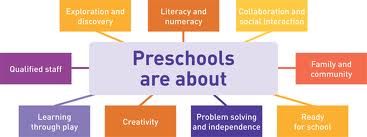
Preschool does matter. The idea is for young children to derive best results from the experience. Let preschools be what they are; a place where age appropriate learning is practiced. A place where creativity, problem solving, exploration and discovery of the world through play is built. They can be Einsteins' but absolutely not through stress. 

20/09/2012

Does 'texting' put grammar at risk?...txt, 2day, fone etc

Almost everyone who sends text messages tends to occasionally or frequently as the case may be, use shorthand or  a variety of abbreviations for words. It is now difficult for many to write in social media  using proper spellings and honestly it has become quite embarrassing and difficult to read some texts. I'm sure most people will agree with me on this one. But does this shortened language of 'text-speak' as I'd like to call it, have a negative effect on student's grammar skills? According to a recent study, YES it does!


A group of 11-15 year olds were surveyed on the amount of texts they sent and received. The survey was followed up with a grammar test that was focused on the usage of punctuation, possessives, apostrophes and comma. It was found that the more often a student sent and received text messages using text-speak, the worse their grammar was! Shocking? I think not! Whatever is practiced often becomes a part of you obviously.

It is time for everyone to control the usage of text-speak and if you have to, use it sparingly. Encourage your teenagers to practice using full/correct spellings  and punctuation marks as much as possible. English Language is a pre-requisite to entry into any university around the world. They shouldn't have to begin to jeopardize their opportunities in any small measure, especially not through 'text-speaking'.

19/09/2012

The blacks and blues may fade away but hidden scars won't go away.


"Why me?"....the cry of a woman whose child had just been raped. The occurrence of these kinds of issues is seemingly on the rise. The truth is that it isn't! The media boom in Nigeria has only just helped to broadcast stories such as this one.

The adverse effect of sexual abuse on a child's future and education is astronomical. I have witnessed how devastating it can be. Everyone needs to be on the watch to protect children. Adults need not shy away from discussing sexual issues with children from an early age. You may think they (kids) are not aware but they are! Trust me, children get educated from their surroundings; much more than is pleasing to bring to our knowledge! You will find that children do not forget their childhood experiences when they become adults. Has yours been deleted from your memory? I'm sure it's a unanimous NO.

How accurate are children's long-term memories? One study shows that  an infant's memory is fragile and short-lived, except from memory of perceptual-motor actions (movement related skills). Young children can remember a great deal of information. Memories of pre-schoolers are also quite consistent. A recent study tells that young children are less likely to reject that there was  occurrence of an abuse than older children, the older ones may just be too scared to disclose. There is a consensus among memory researchers and clinicians that most people who were sexually abused as children remember all or part of what happened to them although they may not FULLY disclose it. Most leaders in the field agree that although it is a rare occurrence, a memory of early childhood abuse that has been forgotten can be remembered later. So, there is an alarming percentage that memories of the experience stays with them.

We must teach children to speak up boldly, protect themselves in their own little way and be able to determine when an act is wrong. We may leave our kids with home-helps and teachers; but we must leave them with the confidence that they can TELL US whatever is going on when we are not with them. Make them know that they shouldn't tell a lie whether GOOD or BAD! They should be confident knowing that we have their backs and will stand by them no matter what! If the CULPRITS find that a particular child can't be lured so easily, a good percentage of these 'hideous' crimes will be reduced. 

Share an unbreakable and undivided bond with your child. Do not put your child's future at risk by just being distant to matters such as these. Never stop asking questions as my husband will insist! Keep track of their movements. Give your child a voice. Build a confident and  an abuse-free child.


16/09/2012

Looming Teachers' Strike


The Chairman, National Union of Teachers, Lagos Chapter, Mr. Samson Idowu, has said  teachers will go on an indefinite strike come September 21, if the Lagos State Government fails to  fully implement the 27.5 per cent  increase in salary in line with  the new Teachers Salary Scale.

While speaking to journalists, Idowu said that the state government had only paid nine per cent out of the 27.5 per cent.

“We had a meeting with the Lagos State Government on Wednesday and they said that the remaining balance would be included in the 2013 budget. This should not be so. Why do teachers have to wait so long. We are not going to relent on our proposed strike until the Lagos State Government hearkens to our demand. We want this money paid this year. This money has been due since 2008.

“Come September 24, the Lagos State government will see the other side of teachers. We will come in full force. No going back; enough is enough,” he said.

Now, this is partly the reason for the decline in student- knowledge output; Low motivation and remuneration of teachers. These teachers should take a cue from the ongoing Chicago teachers' strike and doggedly speak up for themselves.

15/09/2012

School fees on the rise - The 'BUSINESS' of Education


Reviewing this trend and I'm yet to 'get the hang of it' (as my son would say). Many years ago, our parents paid reasonable school fees; their options included good private, public and federal government schools. I am afraid the choices are now rather difficult relative to value and affordability.

Today, some schools sell infrastructure, facade and exploit unemployment situations in the country to the fullest. Imagine a situation where a graduate of Yoruba language teaches physical education along with his subject. In some of these schools, if you cannot take two or three subjects as a teacher, there goes your appointment. Teachers teach just to get paid.

Many parents are having to break-the-bank to pay fees of schools considered worthy of their children. Good education is expensive no doubt but does it have to be that expensive? Is it commensurate to the value of 'education' you get? There will always be expensive schools but it is hoped that they embody the full value of the cost on teacher quality, teacher-training, top-notch textbooks, world-class extra curricular activities and amenities.


I think that many school owners/administrators have no business being in the sector in the first place. They embellish fees probably in guise of extra curricular activities and programs such as after-school clubs, some excursions, parties, mothers day, fathers day, etc. Some school uniforms are more expensive than 'choice' clothes for kids. Overall, they fall short of their claims.

Check the payroll of their average teacher. It is surprisingly a far cry from what is expected hence they cannot claim they have employed the best hands. However, a handful of schools are doing well in terms of remuneration. Some include monetary incentives alongside awards of excellence.

There aren't many good teachers who are products of expensive schools. I have heard people say that they will get into the 'school business' because it is now a cash cow......very worrying! No wonder some of us teachers refuse to succumb to teaching in just any school! The reason is because we know on a first hand basis that their vision is not basically to impart knowledge but to take advantage of less informed parents who can afford it.

It is even more surprising to note that pre-university education overseas is less in monetary terms and you get a better deal. So what is going on? Who do we lay the blame on? I see many parents complaining, but how can we help?